
Last updated October 31, 2026
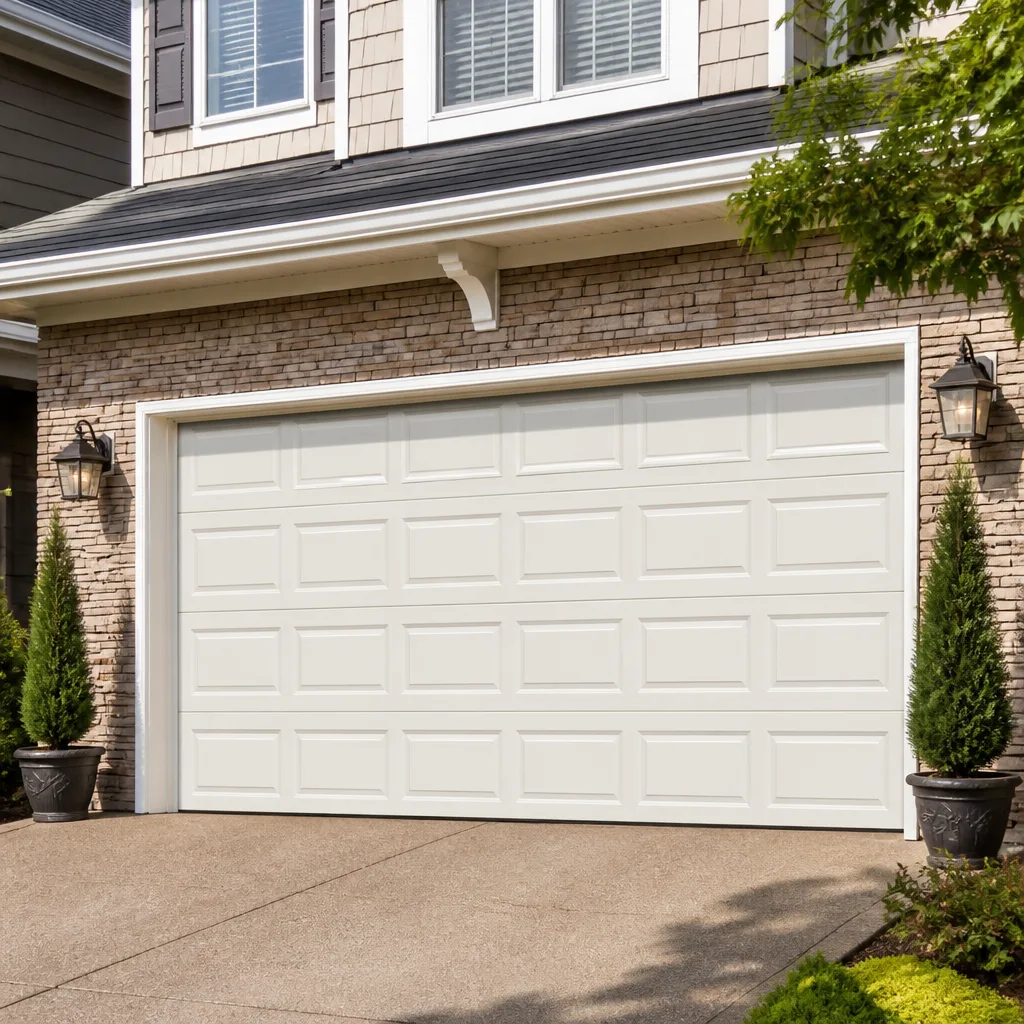 Raised-panel steel
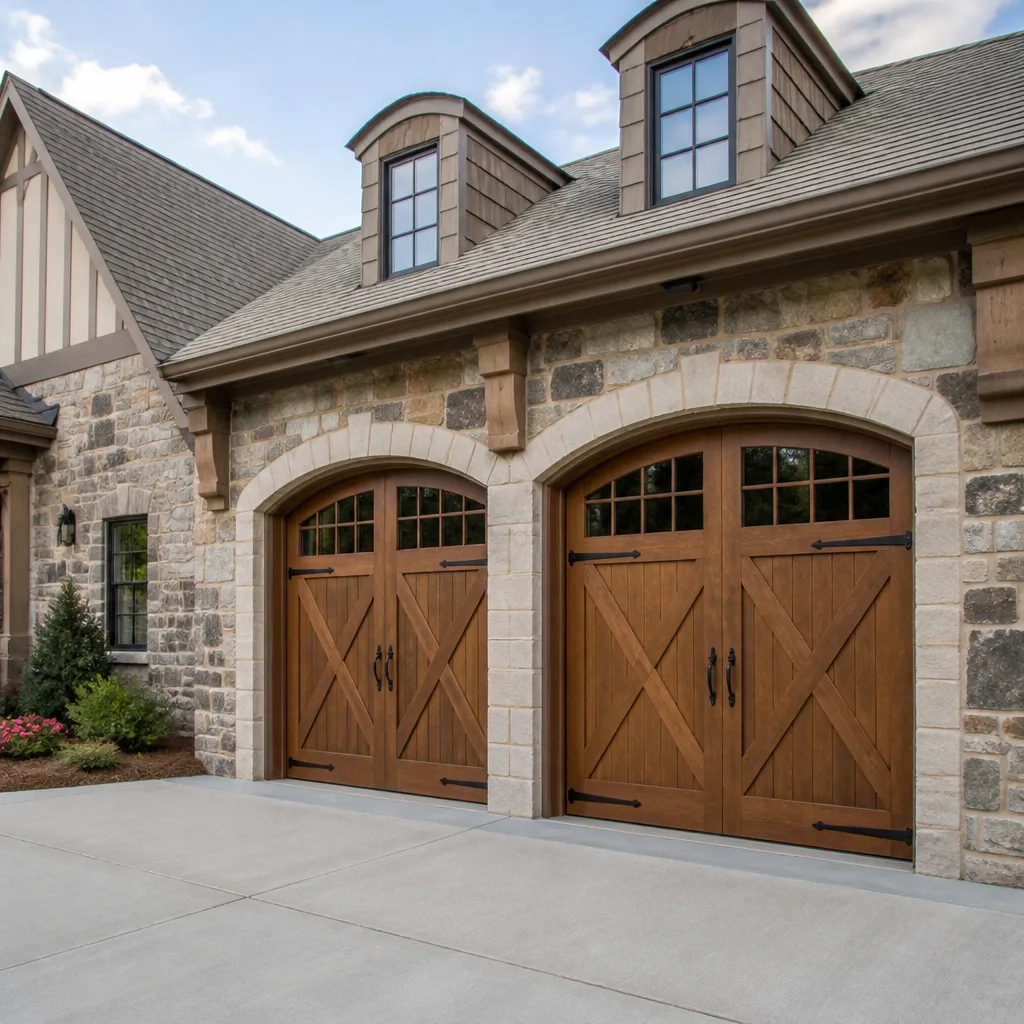 Carriage house
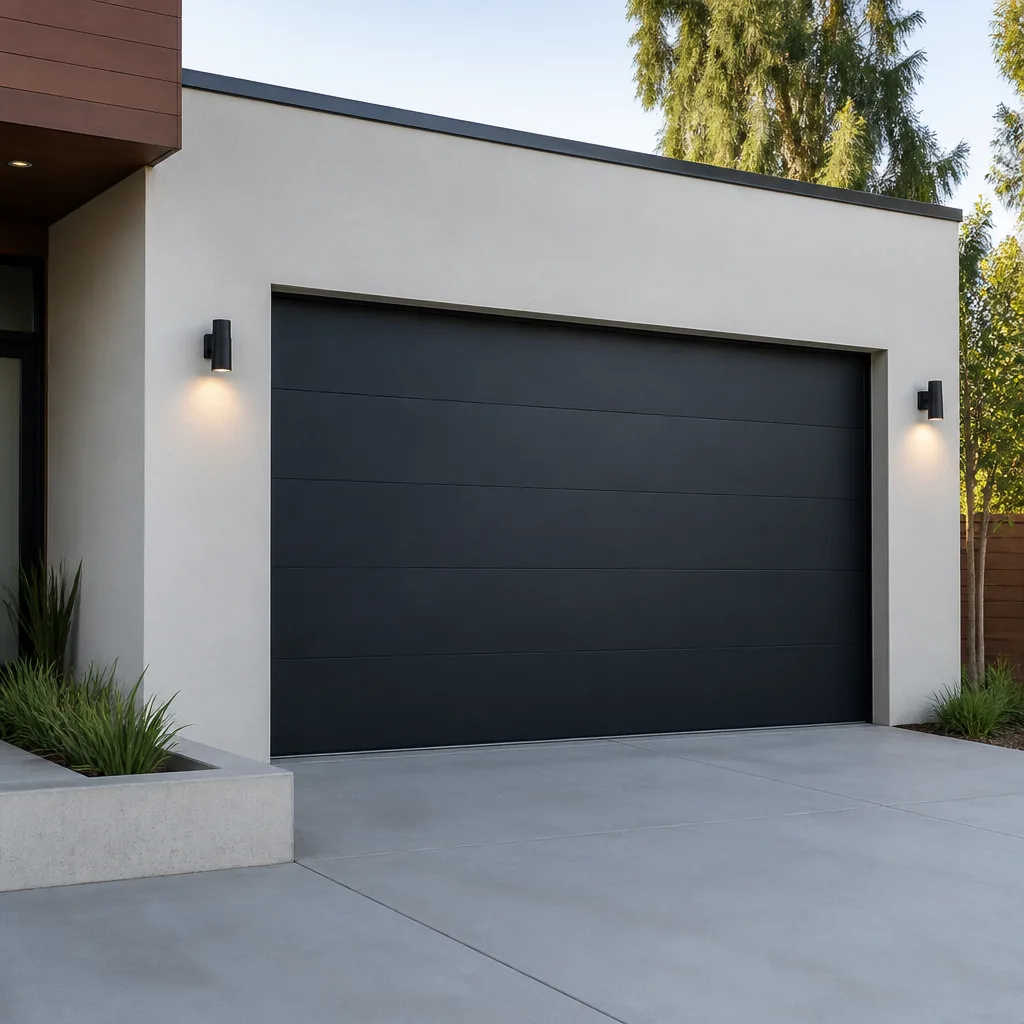 Modern flush
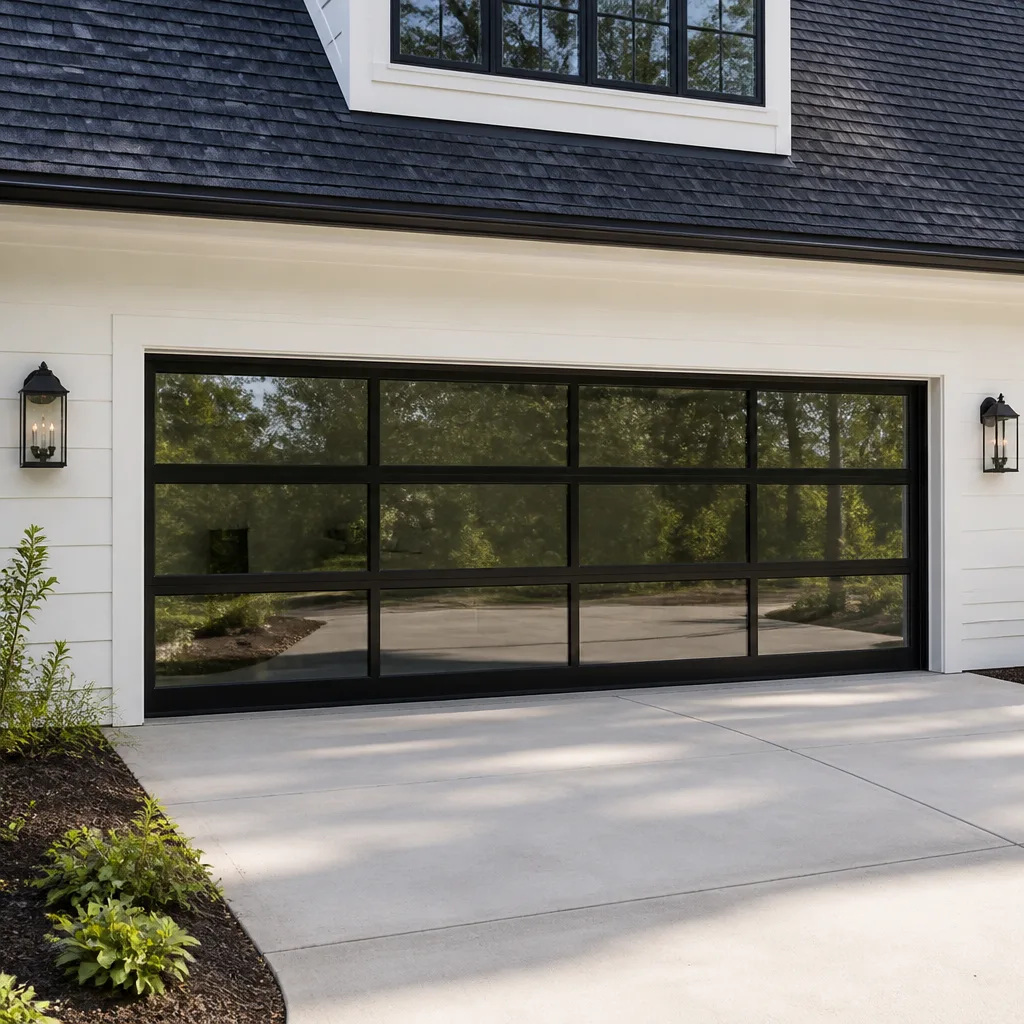 Full-view glass
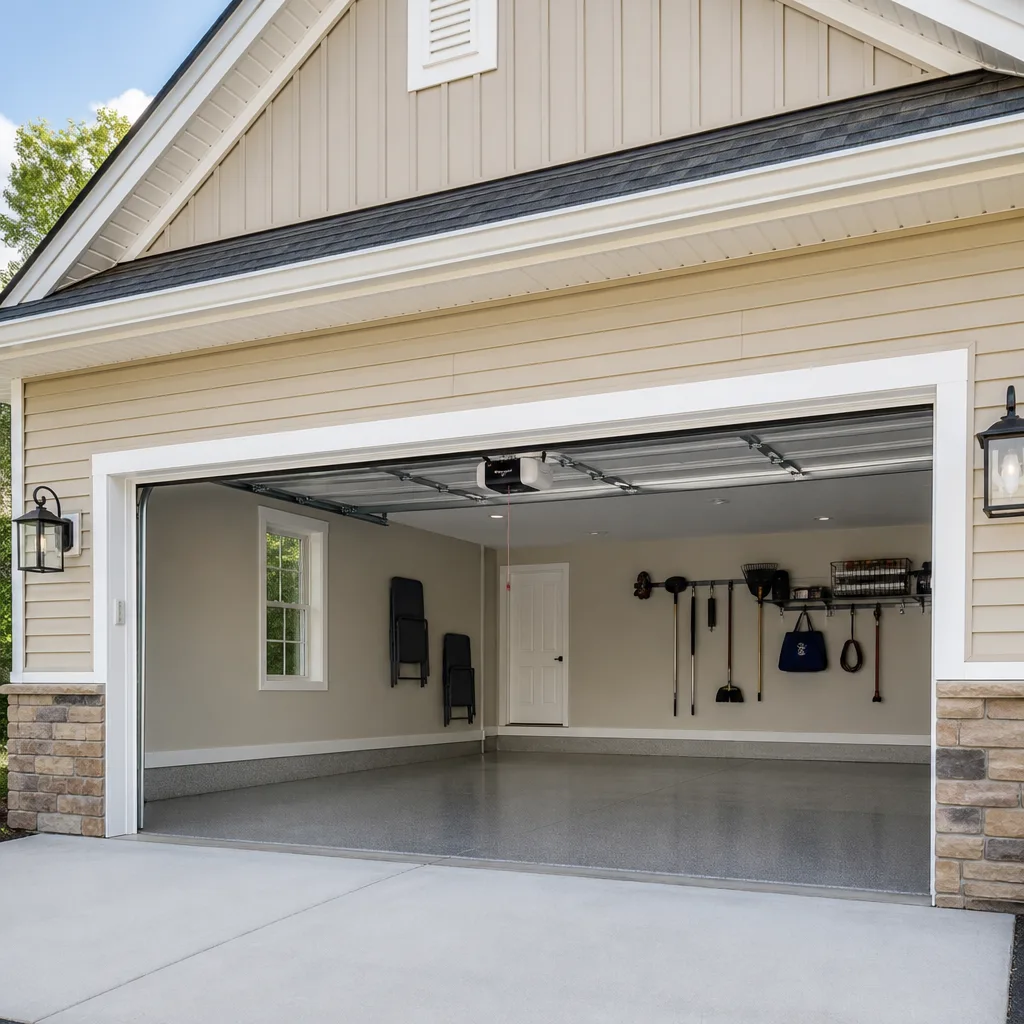 LiftMaster openers
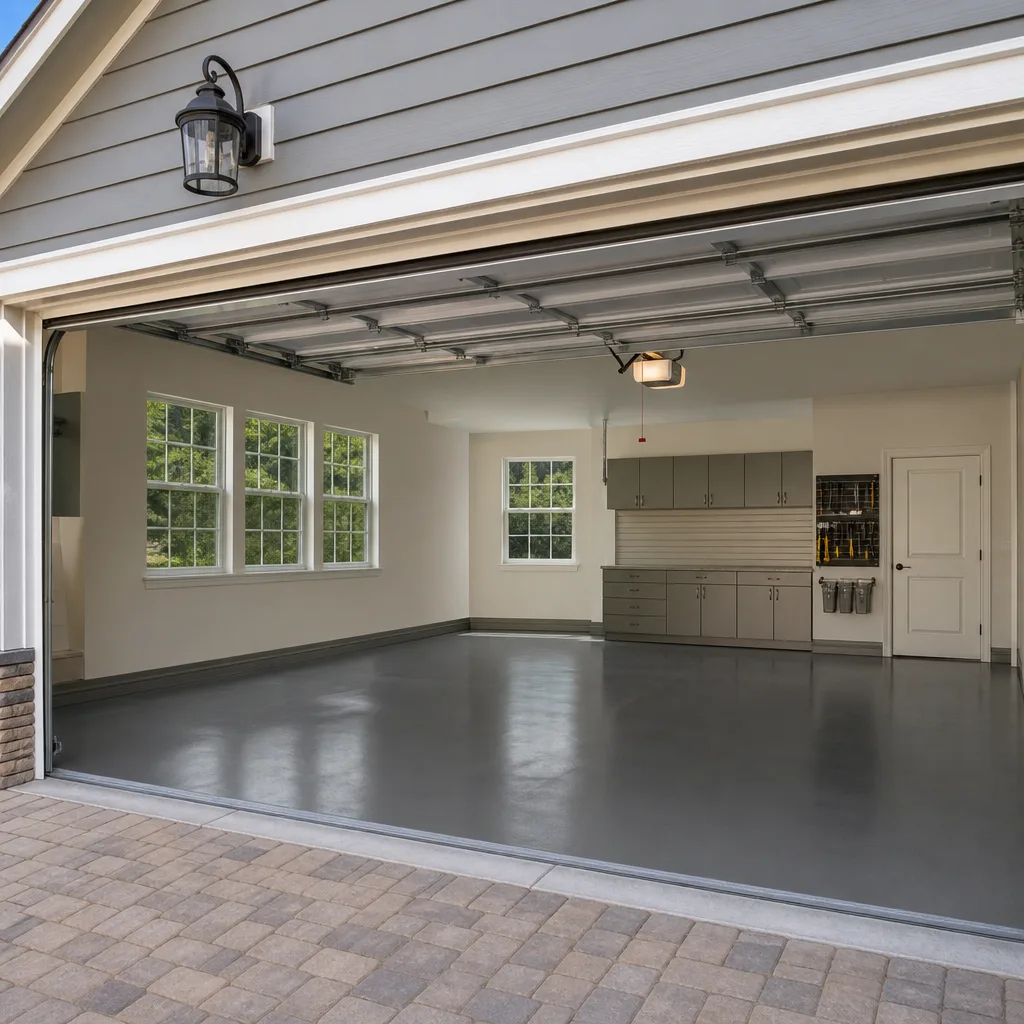 Chamberlain openers
Full 25-point door and opener safety check with every visit - springs, cables, rollers, tracks, and your LiftMaster or Chamberlain opener included
You get a price before we start. It does not change when the truck arrives.
Get your free estimateThe Complete Guide to Garage Door in Kissimmee
The average garage door in Kissimmee endures more thermal expansion cycles in a single summer than a door in Atlanta faces all year. It’s not just the heat. It’s the swinging humidity, the daily afternoon thunderstorms, the salt-tinged air drifting inland from the Gulf and Atlantic, and the UV index that routinely sits at “extreme” from May through September. Most garage door guides are written for the Mid-Atlantic and simply don’t account for what Central Florida does to steel, springs, rollers, and opener electronics. For more local guidance, see our more guides & resources. This guide is different. We’re writing it from Kissimmee, for Kissimmee homeowners, based on what we actually see in garages across Osceola County. You’ll learn which materials survive here, which repair patterns repeat themselves, and how to make decisions that don’t leave you paying for the same fix twice.
Quick Answer
Garage door ownership in Kissimmee, FL requires planning around humidity-driven rust, UV damage to exterior panels and weatherstripping, and wind-load requirements specific to Osceola County. The most reliable setups here use wind-rated steel or composite doors, rust-resistant hardware, and smart openers with surge protection. Most local failures involve rusted torsion springs, snapped lift cables, fried opener circuit boards from lightning storms, and warped polymer rollers that degrade faster in heat. A Kissimmee-specific maintenance routine, done twice a year, extends door life by 5 to 7 years compared to national averages.
Styles & brands we work with
Table of Contents
- How Kissimmee’s Climate Changes Everything About Garage Doors
- Best Garage Door Materials for Kissimmee Homes
- Wind-Load Compliance in Osceola County: What It Actually Means
- The 5 Failure Patterns We See Most in Kissimmee Garages
- A Twice-Yearly Kissimmee Maintenance Routine That Works
- Brand Availability and Parts Support in the Kissimmee Market
- The Full Service Lifecycle: From Installation to Replacement
- Common Mistakes to Avoid
- When to Call a Professional
- Frequently Asked Questions
How Kissimmee’s Climate Changes Everything About Garage Doors
Kissimmee sits in a humid subtropical zone with a distinct wet season that runs from late May through October. Average daytime humidity during those months hovers around 75 to 85 percent. That’s the number behind nearly every accelerated failure we see. Steel garage door springs, especially the torsion springs mounted above the door opening, are under constant mechanical tension. Add persistent moisture and you get corrosion that eats through the spring’s protective coating within 18 to 36 months. In drier climates, the same spring might last 7 to 10 years. Here, a spring that’s still performing at year 6 is the exception, not the rule.
It’s not just springs. Track brackets, hinge pins, and cable anchor plates all rust faster here. We regularly see garage door cables in Kissimmee neighborhoods like Poinciana, Buenaventura Lakes, and Celebration with surface rust that would be rare in a home in Denver or Phoenix. The fix is straightforward: corrosion-resistant hardware with galvanized or stainless finishes, and a maintenance schedule that includes cleaning and lubricating moving parts before the wet season starts.
UV exposure is the second, quieter killer. A garage door facing west or southwest in Kissimmee absorbs direct afternoon sun for three to four hours daily during summer. That UV load fades paint, embrittles rubber weatherstripping, and on metal doors with thin-gauge steel, causes panel warping over time. We see this most on builder-grade 27 or 28-gauge steel doors, which are common in newer subdivisions across Kissimmee. They look fine for the first few years, then gradually develop a subtle wave in the center panels. By that point it’s not repairable; it’s a panel replacement or new door. The material you choose matters here more than any other single decision.
Then there’s the afternoon thunderstorm pattern. Kissimmee averages more than 50 inches of rain per year, most of it coming in short but intense downpours between June and September. Those storms bring wind gusts that test door balance, and they bring lightning. Openers plugged directly into a wall outlet without surge protection fail at a notably higher rate here than in most of the country. A whole-home surge protector or at minimum a quality plug-in surge suppressor on the opener circuit is not optional advice; it’s one of the cheapest preventative measures a Kissimmee homeowner can take.
Best Garage Door Materials for Kissimmee Homes
Choosing a garage door material for a Kissimmee home isn’t about aesthetics first. It’s about how the material reacts to constant humidity, intense sun, and storm season. We break it down by what actually holds up, based on doors we’ve serviced and replaced across Osceola County.
Steel Doors: The Workhorse, With a Caveat
Steel remains the most common garage door material in Kissimmee, and for good reason. It’s affordable, paintable, and available in wind-rated configurations. But not all steel is equal. The single most important spec is gauge: the lower the gauge number, the thicker the steel. In Kissimmee, we recommend 24-gauge or 25-gauge steel at minimum. The 27 and 28-gauge doors common on production homes are more likely to dent in a storm and more likely to warp under sustained heat. Insulated steel doors, with a polyurethane or polystyrene core sandwiched between two steel skins, outperform single-layer doors dramatically in Central Florida. The insulation doesn’t just help garage temperature; it stiffens the panel, which matters on a 16-foot door that’s fighting afternoon thermal expansion daily.
Clopay and Amarr both manufacture steel doors in 24-gauge with factory-applied finishes designed for coastal and subtropical environments. Those finishes hold color better than paint applied by a builder or homeowner. If the door is fading after year 4, it’s usually a factory finish issue or a north-facing door that still gets reflected heat from a driveway. We see it in nearly every neighborhood, from the older homes near downtown Kissimmee to newer builds in the Four Corners area.
Composite and Faux-Wood Doors
Composite doors, often made from wood fibers bound with resin and covered with a textured finish, are gaining traction in Kissimmee for one reason: they look like wood but they don’t rot, warp, or require the maintenance of real wood in a humid climate. Real wood doors in Central Florida have a short service life. They swell in summer, shrink in winter, crack around panel joints, and build up mold in areas that never dry out. Composite gives homeowners the aesthetic without the upkeep penalty. Amarr’s composite line, in particular, holds up well under Kissimmee sun, though the price point sits 25 to 40 percent above comparable steel.
Aluminum Doors: Right for Modern Homes, Wrong for Some Lots
Aluminum doors with glass panels or frosted inserts are popular among contemporary homes in certain Kissimmee communities, particularly around the West U.S. 192 corridor and the short-term rental market. Aluminum doesn’t rust, and that’s a genuine advantage here. The tradeoff is thermal conductivity: aluminum transfers heat readily, which means a full-view aluminum door on a west-facing Kissimmee garage turns the space into an oven by 4 p.m. in July. They also dent more easily than steel. For homeowners who want the modern glass look, we recommend a thermally broken aluminum frame, which adds cost but significantly improves both heat resistance and wind performance.
What We Actually Recommend
- Best overall for Kissimmee: Insulated steel, 24-gauge, with a factory finish and wind-rating. It balances cost, durability, and availability of replacement parts.
- Best for high-UV west-facing doors: Composite or a premium-grade steel door with a UV-stable factory color. Avoid custom dark paints; they absorb heat and fade fastest.
- Best for coastal-adjacent communities or heavy rust exposure: Aluminum or composite frames, paired with galvanized and stainless hardware.
- Avoid: Single-layer 27/28-gauge steel on any door width over 8 feet, and real wood unless you’ve accepted a 10 to 12 year replacement horizon.
Wind-Load Compliance in Osceola County: What It Actually Means
If you’re buying a new garage door in Kissimmee, wind-load compliance isn’t a paperwork formality. It’s a structural requirement written into the Florida Building Code, and Osceola County enforces it. Here’s what it means in plain language: your garage door must be designed and tested to resist the wind pressures calculated for your specific home’s location, based on its distance from the coast, its exposure to open terrain, and its structural design. Kissimmee is far enough inland that requirements are less severe than coastal areas like Brevard County, but not so far inland that you can ignore the requirement. The county sits in a wind-borne debris region, and in certain areas around Kissimmee that designation changes what kind of door and hardware you can install.
Practically, wind-load compliance affects three parts of your purchase:
- The door itself. Manufacturers like Clopay and Amarr produce doors in multiple wind-load ratings. The correct rating depends on your home’s specific wind zone, not the neighborhood average. A home in Poinciana may have a different requirement than a home off John Young Parkway, even though both are in Kissimmee.
- The reinforcement struts. Wind-rated doors often include horizontal steel struts bolted to each panel. These struts add stiffness and prevent the door from bowing inward under negative pressure. If a contractor offers to skip the struts to save money, walk away. The door won’t be code compliant, and if it fails in a storm, the pressure differential can lift your roof or blow out walls.
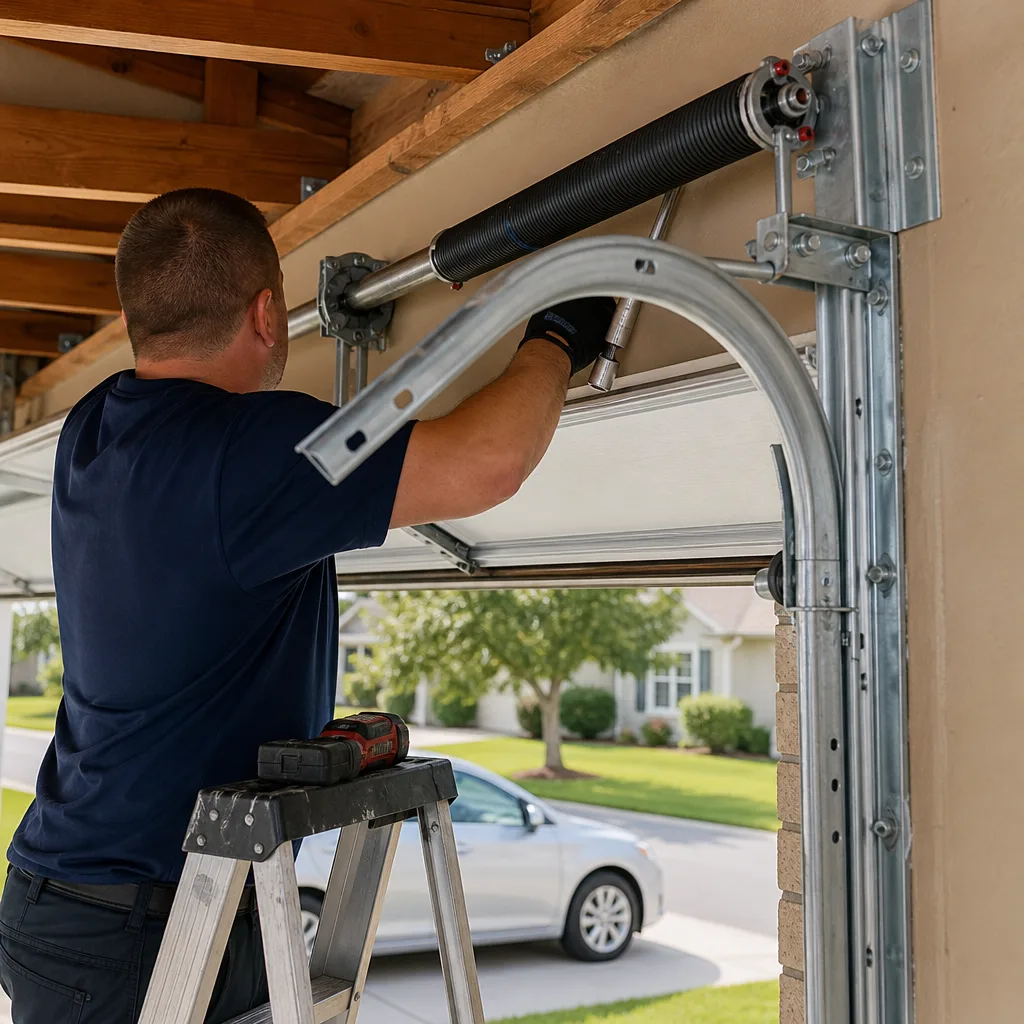
- The track, jamb brackets, and anchoring hardware. Wind load doesn’t just push against the door panel; it pulls on the track and the hardware that holds the door to the garage framing. Code-compliant installations use specific bracket spacing and anchor types. This is why you want a Kissimmee garage door specialist doing the install, not a general handyman who’s never pulled an Osceola County permit.
We’ve seen enough non-compliant installations in Kissimmee to know this is a recurring problem. Doors installed without permits by out-of-market contractors are the typical culprit. When the door fails, it’s expensive, and the homeowner has no recourse because the installer is gone. If you’re replacing a garage door, ask for your home’s wind speed and exposure category up front, and make sure the quote specifies a door rated to that requirement. A reputable installer will show you the numbers. We do this on every new door we quote in Kissimmee. If the person quoting can’t tell you your wind requirement, they’re not the right person for the job.
The 5 Failure Patterns We See Most in Kissimmee Garages
After years of working on garage doors across Kissimmee and Osceola County, certain failures repeat on a schedule. Here are the five we see most often, what causes them here specifically, and when they tend to show up.
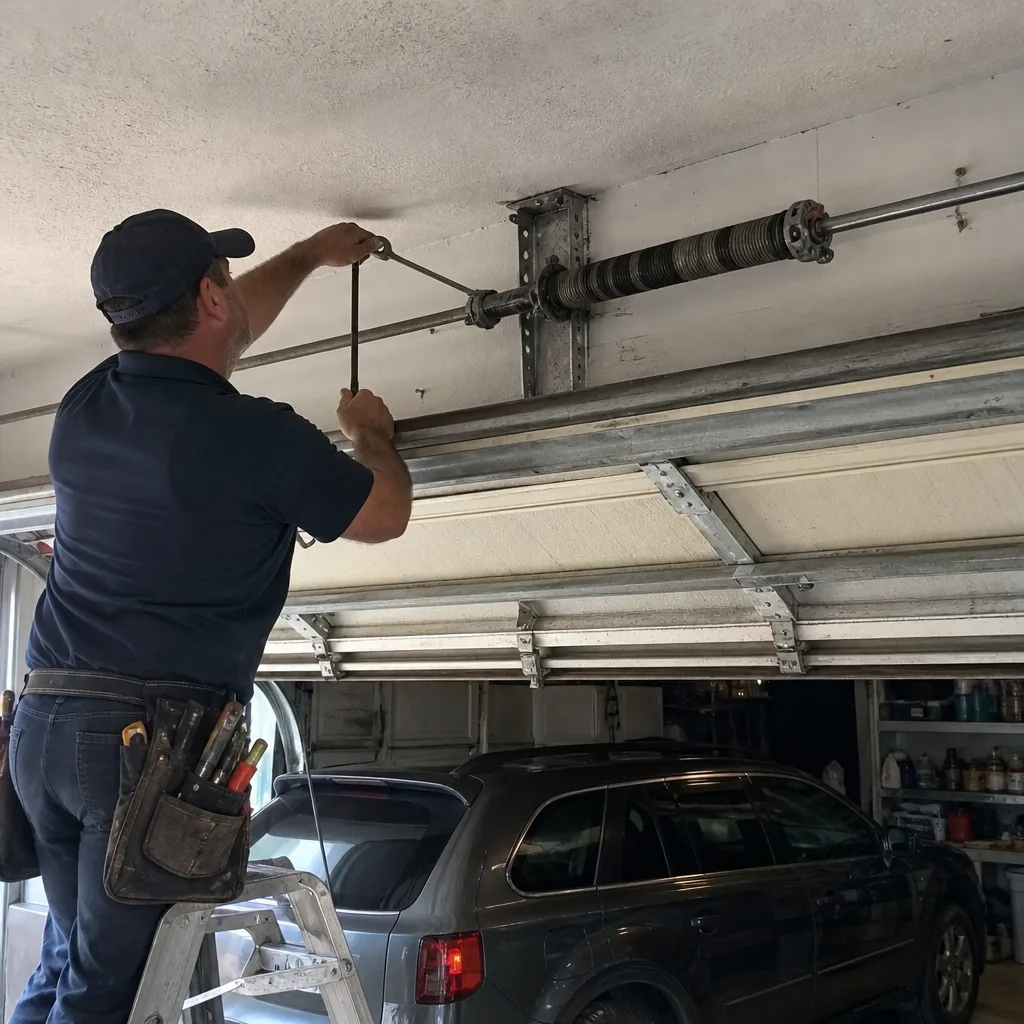
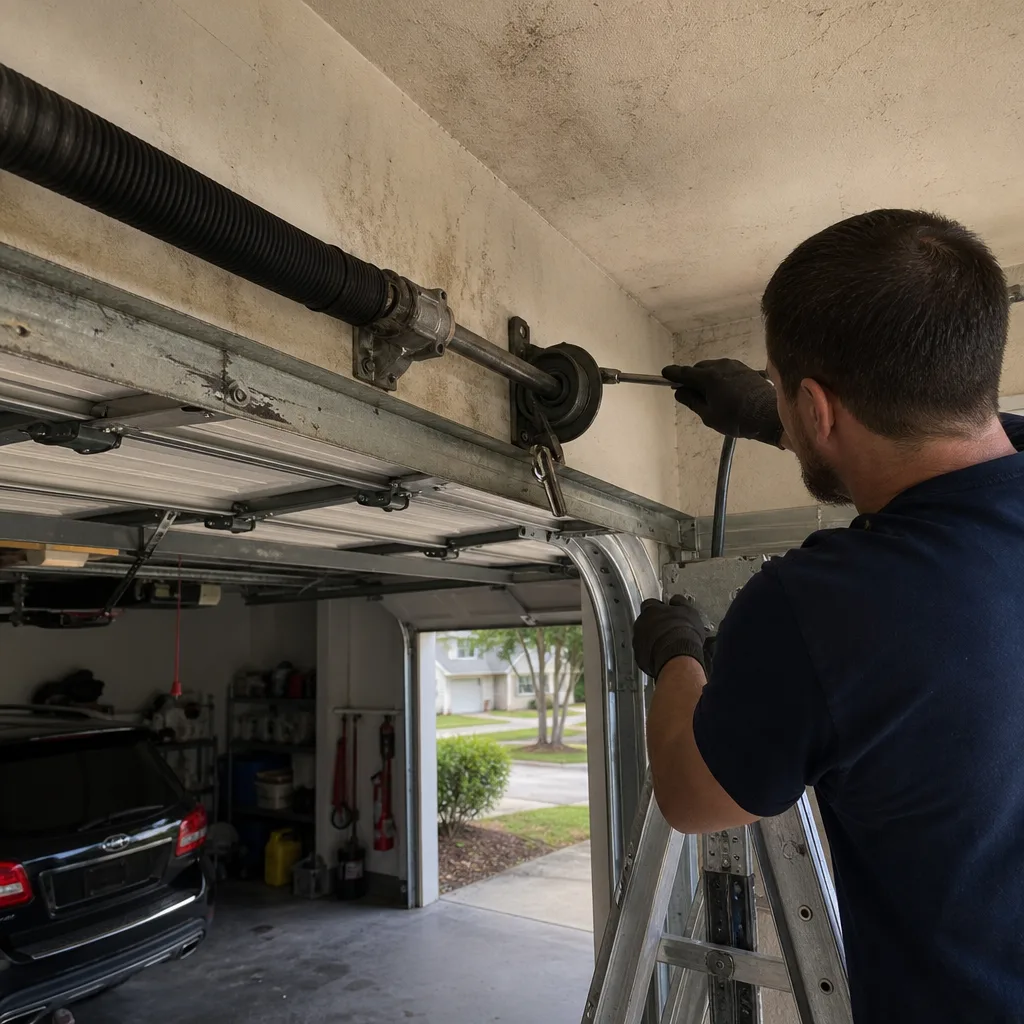
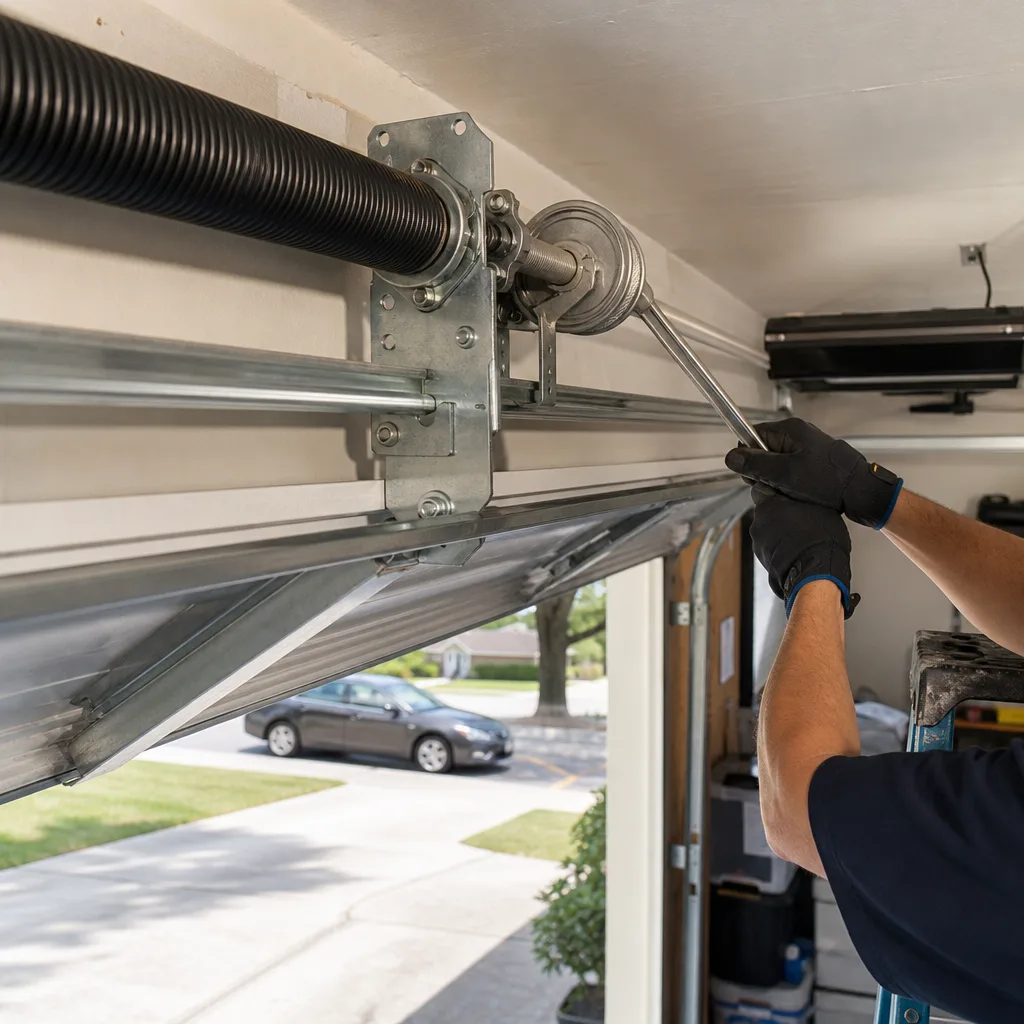
- Rusted torsion springs (years 4 to 7). The spring above your door carries thousands of pounds of tension. In Kissimmee’s humidity, the coil’s surface rust begins within the first two years and steadily eats into the metal. Most springs here fail between years 4 and 7, compared to years 8 to 10 in drier states. Rust concentrates where the coils touch, and once the coil breaks, the door won’t lift manually or with an opener. This is a dangerous failure. A high-tension spring under load stores significant energy, and attempting to replace it without the correct winding bars and training can cause serious injury. Leave this to a pro.
- Snapped or frayed lift cables (years 5 to 8). The cables that run along each side of the door work in tandem with the springs. In Kissimmee, cable rust causes individual wire strands to break. Once enough strands go, the cable snaps under load. You’ll often notice the door looks uneven when opening, or one side sits slightly higher than the other. If you see a frayed cable, it’s time to call before it fails completely.
- Fried opener logic boards (storm season, any year). Chamberlain, Genie, and LiftMaster openers all use circuit boards that are sensitive to power surges. Summer lightning strikes within a few miles of your Kissimmee home can induce a surge strong enough to kill the board, even if the strike never hits your house directly. The symptom is usually an opener that’s completely dead, with no lights and no response from the wall button or remote. Surge suppression is the only real defense. Without it, you’re rolling the dice every storm season.
- Warped or cracked polymer rollers (years 2 to 5). Many doors come with nylon or plastic rollers that degrade in heat. Kissimmee garages that aren’t ventilated routinely hit 110 to 120 degrees Fahrenheit inside during summer afternoons. Plastic rollers crack, the bearings bind, and the door starts to jerk or grind as it moves. Upgrading to sealed-bearing nylon rollers, or steel rollers with sealed bearings, fixes this permanently and makes the door noticeably quieter.
- Deteriorated bottom weatherstripping and side seals (years 2 to 4). Rubber and vinyl seals in Kissimmee take a beating from the sun and the wet-dry cycle. Once the bottom seal develops gaps, rain runs under the door during summer downpours, and the garage becomes an insect entry point. This is the easiest fix on the list and the one most homeowners ignore until they notice water on the garage floor.
These five patterns account for a large majority of the service calls we make in Kissimmee. None of them are mysterious. All of them are predictable if you know what this climate does to a door.
A Twice-Yearly Kissimmee Maintenance Routine That Works
National garage door maintenance guides say “lubricate your door twice a year.” They rarely say when, and that timing matters in Kissimmee. You want your first maintenance session in late April or early May, before the wet season starts. The second comes in late October or early November, after the summer storms have finished their work. This schedule catches seasonal damage before it compounds.
Here’s a step-by-step routine that takes about 30 minutes and prevents most of the failures above:
- Inspect the springs visually. Look for surface rust on the coils and any gap where a coil has separated. If you see a gap, that spring has broken and the door should not be operated. Do not touch the spring. Call a professional.
- Check the cables on both sides. Run your eyes along the full length of each cable. Fraying, broken strands, or rust at the bottom cable loop are all signals that replacement is due. Again, do not attempt to replace cables yourself; these are under the same high tension as the springs.
- Lubricate the moving parts. Use a white lithium grease or a garage door specific lubricant on the torsion spring coils, the hinges, and the roller bearings. Wipe down the track first with a clean rag to remove rust dust and grit. Do not grease the track itself; that collects dirt and causes more problems than it solves.
- Clean the weatherstripping. The rubber seal at the bottom of the door and the vinyl strips along the sides collect mildew in Kissimmee’s humidity. Wipe them down with soapy water. If the bottom seal is cracked, brittle, or flattened, replace it. This is a 15-minute DIY job that requires no special tools.
- Test the auto-reverse feature. Place a 2×4 flat on the ground under the door and close it. The door should reverse when it contacts the board. This safety feature is mandated by federal law and prevents serious injury, particularly to children and pets.
- Run the door through a full cycle. Watch and listen. A properly balanced door moves smoothly without jerking, grinding, or banging. If the door looks like it’s struggling, or if one side lifts before the other, the door is out of balance and the springs are likely wearing. This is the time to have it adjusted, not after something breaks.
This routine is deliberately simple. It’s about catching issues early so you’re not paying emergency rates in the middle of a July thunderstorm when your door won’t close and the garage is flooding. For seasonal preparation tips, read our Garage Door Emergency Preparedness Guide for Kissimmee Homes.
Brand Availability and Parts Support in the Kissimmee Market
Brand matters in Kissimmee in a way that rarely makes national guides: it determines whether your repair can happen same-day or whether you’re waiting a week for a part. Here’s what we know from working in this market.
Chamberlain and LiftMaster, both manufactured by the same parent company, are the most common openers installed in Kissimmee homes. That’s partly because they dominate the smart-home opener market through MyQ connectivity, and partly because many builders use Chamberlain openers as standard on new construction. Parts are broadly available locally, and both brands are well supported by professional supply channels. If your Chamberlain or LiftMaster opener fails, it’s usually repairable same-day from local stock.
Genie is a close third in residential openers, and we see a healthy number of Genie units in older Kissimmee homes. Genie parts, especially circuit boards and drive systems, are available but sometimes have longer lead times depending on the specific model.
On the door side, Clopay and Amarr are the two most widely installed brands in Kissimmee and across Osceola County. Both have strong professional distribution in our area, which means replacement sections, hinges, and hardware arrive within a couple of days, not weeks. Wayne Dalton doors are also common, particularly in older builds, and their parts are generally available but less ubiquitous than Clopay and Amarr. Craftsman and Raynor are less common in local homes, but we work on them regularly and can source parts when needed.
What matters more than the brand name is who installs and services it. We’re brand-agnostic by design. Our technicians work on doors and openers from Chamberlain, Genie, Clopay, and Amarr equally, without pushing homeowners toward a replacement they don’t need just because we prefer one manufacturer. The right parts for your brand, not a workaround, is how we approach every repair. If you own a Wayne Dalton door with a dead spring, we replace the spring. We don’t tell you the door is obsolete and try to sell a new one.
One more Kissimmee-specific note: if you live in a neighborhood under an HOA, check your covenants before choosing a door. Some communities have specific color or style requirements. The wrong factory finish can turn into a compliance letter from the association. We’ve seen it happen in several communities along the U.S. 192 corridor and around Lake Tohopekaliga. Ask first.
The Full Service Lifecycle: From Installation to Replacement
A garage door is a mechanical system, not a static fixture. It has a finite service life, and that life is shorter in Kissimmee than in most of the country. Here’s what to expect at each stage, based on what we see in garages throughout Osceola County.
Years 0 to 3: The Quiet Period
A properly installed, wind-rated door with quality hardware should require nothing beyond the twice-yearly maintenance routine. This is the period where you should be confirming that the installation was done right: door balances smoothly, tracks are aligned, the opener reverses properly. If the door is banging or struggling in the first two years, that’s an installation or hardware problem, not normal wear. A proper installation sets the ceiling for how long the door will last. A careless installation shortens every subsequent stage.
Years 3 to 7: The Maintenance Window
This is where the Kissimmee climate starts to show its work. Springs develop rust. Rollers wear. Weatherstripping degrades. Seals crack. During these years, you’ll likely replace rollers, weather seals, and possibly a spring before failure if you’re on top of the maintenance schedule. The pattern here in Kissimmee is predictable: homeowners who inspect and maintain through years 3 to 7 typically avoid emergency failures and extend door life well into year 12 or beyond. Homeowners who skip maintenance hit a wall around year 7 or 8.
Years 7 to 12: The Replacement Era
Between years 7 and 12, most Kissimmee garage doors need their first major component replacement: torsion springs, cables, and often the opener itself. Openers typically last 10 to 15 years, and in our climate the electronics age faster than the mechanical drive. The key decision point is whether to repair or replace. If the door is a 24-gauge steel door with an insulated core and the panels are still straight, repairing the hardware makes sense. If the door is a builder-grade 27-gauge single-layer door with visible warping, rust bleed from the panel seams, and a tired opener, installing a complete new system is the smarter money. Repairing a degraded door just defers the replacement cost while the door continues to deteriorate in the Kissimmee sun.
From a broken spring to a full new door, the lifecycle always follows the same shape. The only variable is how long each stage lasts, and that depends on the original installation quality, the material choice, and the maintenance consistency. Kissimmee homeowners who get all three right can expect 15 to 18 years of service. Those who don’t are replacing doors at year 9 or 10.
Common Mistakes to Avoid
- Choosing a door by price alone. Builder-grade doors in Kissimmee fail faster, warp sooner, and cost more in repairs than a mid-grade insulated door. The upfront savings disappear within five years.
- Skipping the wind-load calculation. Installing a non-compliant door in Osceola County isn’t just a code violation; it’s a structural risk to your home. Always ask for the wind rating.
- Letting rust go unchecked. Surface rust on springs turns into spring failure. In Kissimmee, that timeline compresses. If you see rust, schedule an inspection before the wet season.
- Plugging the opener directly into the wall. Lightning surge damage is one of the most preventable opener failures we see. A $30 surge protector saves a $150 to $300 logic board.
- Using the wrong lubricant. WD-40 is a solvent, not a garage door lubricant, and it dries out moving parts. Use white lithium grease or a purpose-made garage door lubricant on springs, hinges, and rollers.
- Hiring a general handyman for a door installation. Garage doors are complex, tension-loaded systems. A specialist who installs doors daily gets the balance, the wind-load hardware, and the safety features right. A generalist often gets one of the three wrong.
- Assuming every brand is the same. They’re not. Local parts availability varies, and opener brands have different failure modes in our climate. Work with a specialist who knows the brand you already have.
When to Call a Professional
Some garage door tasks are genuinely safe for a homeowner. Replacing weatherstripping, lubricating moving parts, and testing the auto-reverse function all fall into that category. Anything involving high-tension components is not. Broken springs, frayed cables, and bent tracks are under stored mechanical force that can cause serious injury if released incorrectly. We never recommend DIY work on these components, in Kissimmee or anywhere else. If the door won’t open, if it’s visibly crooked, if a cable has snapped, or if the opener is dead after a storm, the right move is a call to a professional who works on these systems daily. Kissimmee Garage Door Service home offers free estimates throughout Kissimmee, and we quote every repair before any work begins. Call (844) 662-1429.
Frequently Asked Questions
A properly maintained, wind-rated steel garage door in Kissimmee typically lasts 15 to 18 years, while builder-grade single-layer doors often need replacement by year 9 or 10 due to heat warping, rust, and UV deterioration. Regular maintenance through years 3 to 7 is the single biggest factor in hitting the longer end of that range. Call (844) 662-1429 to schedule a free maintenance inspection in Kissimmee.
Yes, Osceola County enforces Florida Building Code wind-load requirements for garage doors, and the specific rating depends on your home’s wind zone and exposure category. A compliant installation includes a rated door panel, reinforcement struts, and proper track anchoring hardware. Estimates from Kissimmee Garage Door Service always include your exact wind requirement.
Lightning-induced power surges are a leading cause of garage door opener failure in Kissimmee, and they typically damage the opener’s logic board beyond economical repair. Plugging your opener into a quality surge protector is the cheapest prevention available. If your opener is already dead, call (844) 662-1429 for a diagnostic and replacement quote.
Yes, our technicians service doors and openers from all major residential brands, including Chamberlain, Genie, Clopay, Amarr, LiftMaster, Wayne Dalton, Craftsman, and Raynor. We repair the brand you already own and maintain parts relationships with each manufacturer’s local supply channels. Estimates are free throughout Kissimmee.
A new garage door in Kissimmee typically ranges from $1,200 to $4,500 installed, depending on door size, material, insulation, wind-load rating, and any HOA finish requirements. The price is quoted and agreed before work begins, so there are no surprises at the end. Call (844) 662-1429 for an exact quote.
If your door is a 24-gauge insulated steel door with straight panels, repairing the hardware is almost always the better value. If it’s a builder-grade door with visible warping, rust bleed, or panel damage, replacement is typically the smarter financial decision in Kissimmee’s climate. We’ll give you an honest recommendation based on the condition of your door, not our preference. Call (844) 662-1429.
The Bottom Line
A garage door in Kissimmee isn’t the same animal as a garage door in Atlanta, Denver, or even Tampa. Humidity rusts springs faster, UV warps thin steel, afternoon storms eat opener electronics, and Osceola County wind-load rules make every installation decision more consequential. The homeowners who get the most from their doors choose materials made for this climate, run the twice-yearly maintenance schedule on time, and work with a specialist who knows the brands they already own. Garage Door Repair in Taft and Garage Door Opener Repair in Taft cover nearby areas with the same Kissimmee-specific approach. For new door quotes in the region, Garage Door Installation in Taft details our installation process. Whether you need a spring replaced, an opener diagnosed, or a full new door installed, one call covers it. Reach Kissimmee Garage Door Service at (844) 662-1429.
Written by the team at Kissimmee Garage Door Service, serving Kissimmee since 2011.
See the difference
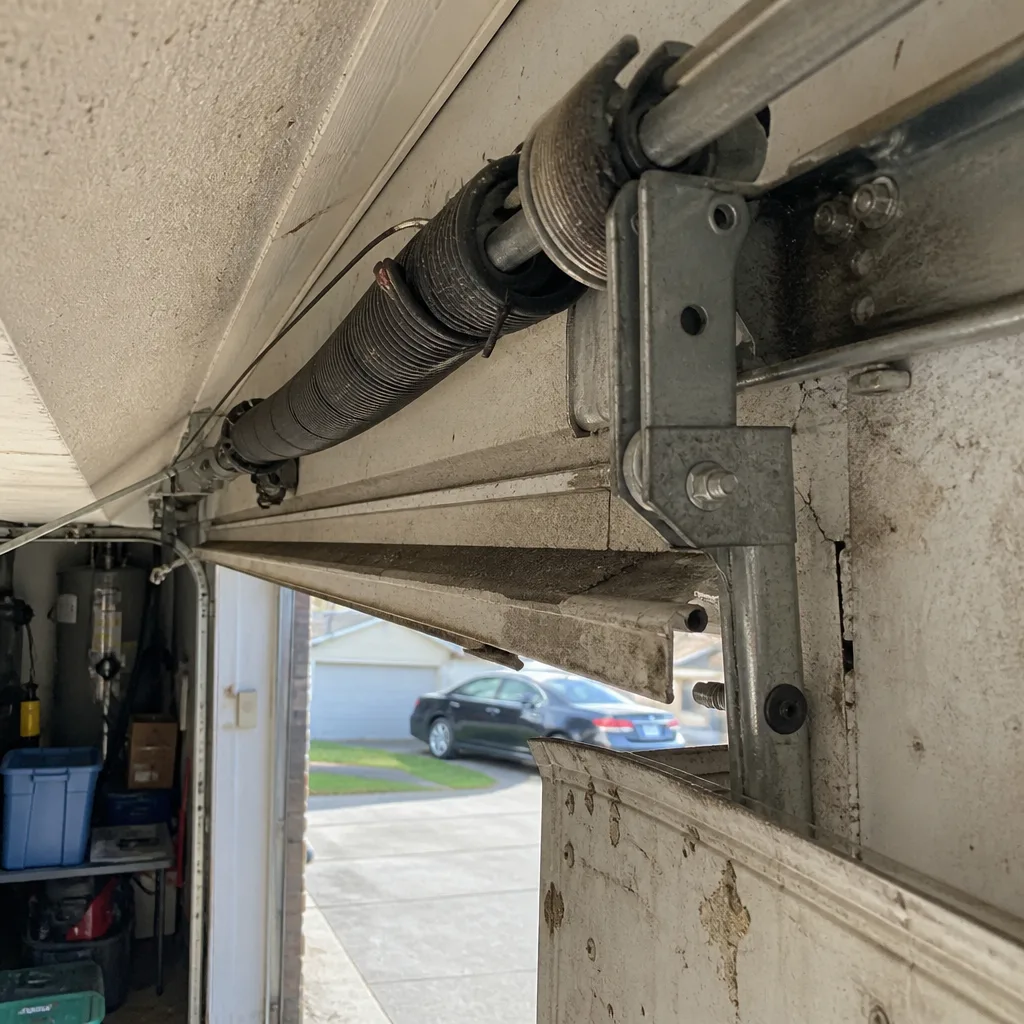 Before
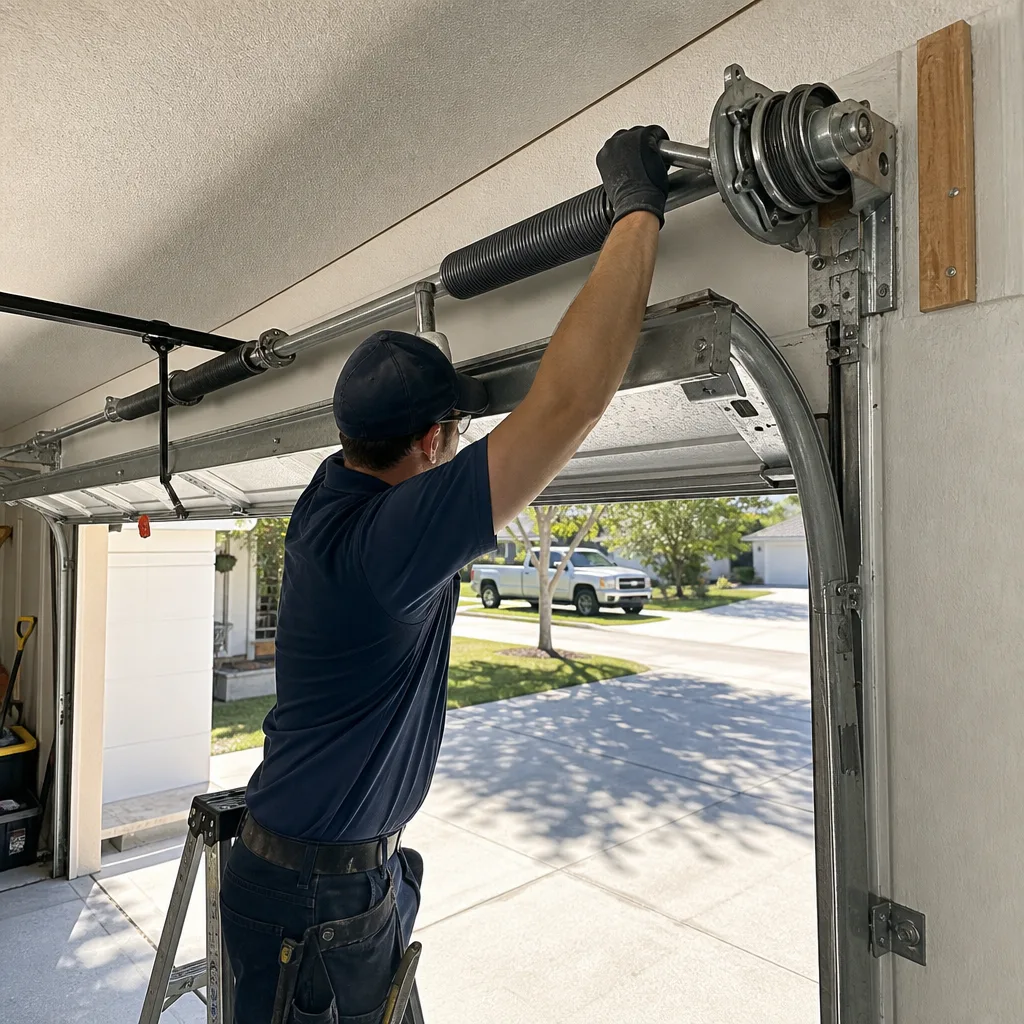 After
 Before
 After
 Before
 After